Framed vs. Unframed Mockups: Which Sells Better on Etsy?
Most poster listings on Etsy ship a flat print — no frame included. But almost every top-performing listing shows the print in a frame, hanging on a wall. That gap is where a lot of sellers get nervous: is a framed mockup a smart way to help buyers visualise the final look, or is it setting up a return when a $14 print arrives without the $60 frame they saw in the photo?
Both things are true at once. Framed mockups convert better because they do the imagining for the buyer. They also cause "I thought this came framed" messages when a listing leans on them without saying otherwise. The fix isn't picking one style — it's using both correctly, in the right order, with the right words next to them.
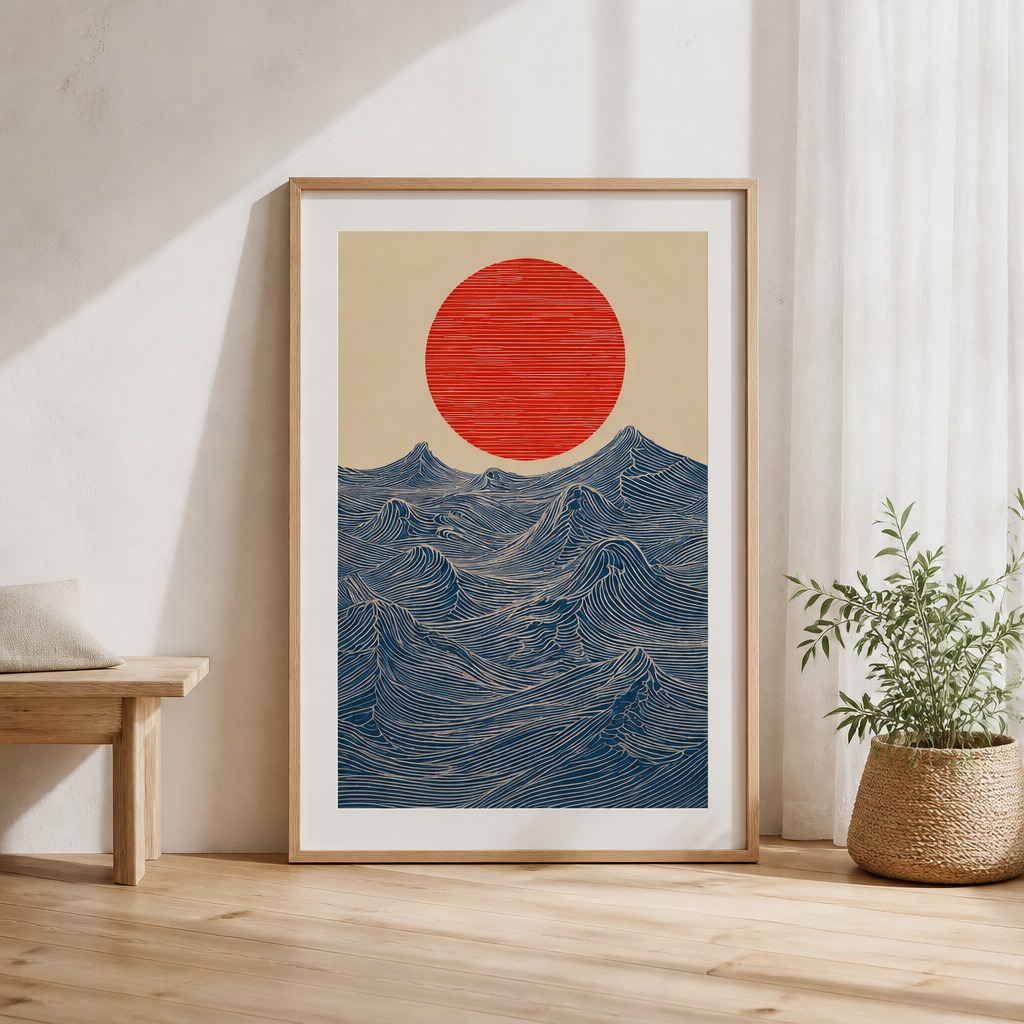
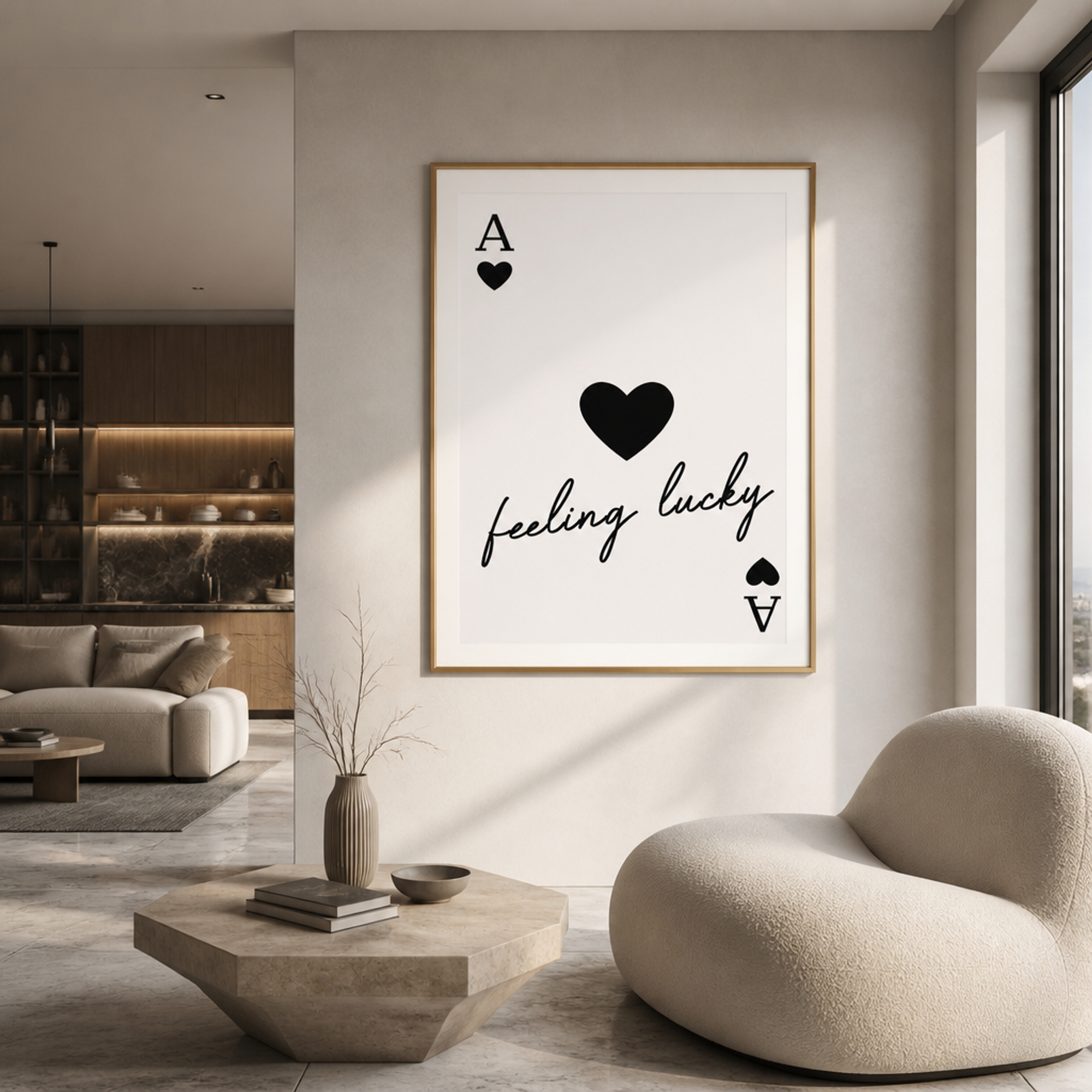
Same artwork, two honest representations: framed for context, unframed for accuracy.
Why framed mockups convert better
A flat rectangle of art on a white background asks the buyer to do work — imagine it printed, imagine it framed, imagine it on their wall, at their scale, in their light. Most buyers won't do that work; they'll just scroll past. A room mockup with a frame already does all of it for them: scale, proportion, colour against a wall, how the frame style reads next to furniture. That's the entire reason mockup tools exist.
This is also why sellers default to wood or black frames rather than showing the print alone — a framed shot simply looks more "finished" and more expensive, even when the frame isn't part of the sale.
Why that same photo can backfire
The failure mode isn't using a framed mockup — it's using only framed mockups with no text anywhere in the title, photos, or description clarifying that the frame isn't included. A buyer who skims photos and doesn't read descriptions carefully (which is most buyers, on a phone, mid-scroll) walks away with a wrong impression. That mismatch shows up later as a support message, a lower rating, or a return — all avoidable with two things: one unframed photo in the set, and the words "print only" or "frame not included" somewhere visible.
Etsy specifics: Etsy's policies require listing photos to accurately represent what a buyer receives. A framed mockup is fine as a styling reference — it becomes a problem only if nothing in the listing tells the buyer the frame isn't included.
The gallery order that works
Etsy gives you up to 10 photos. Treat framed and unframed mockups as different jobs in that sequence rather than picking one over the other:
Lead with one strong framed room mockup
Your thumbnail and first photo are what get the click in search results — this is where a framed, in-context shot earns its keep. Pick your best room style and let it do the selling.
Show 2–3 more framed variants
Different room styles, or the same room in a different frame colour. This is what lets a buyer picture the print in a space that looks like theirs, not just the one you happened to generate first.
Include one true "what you get" photo
A flat, unframed shot of the print itself — no room, no frame, ideally with a size reference. This is the photo that prevents "I didn't know it wasn't framed" messages, because it removes the ambiguity entirely.
Say it in words too, not just photos
Add "Print only — frame shown for size reference, not included" to your title or the first line of your description. Buyers who skip photos still read titles.
Choosing a frame style for the mockup itself
Even though the frame won't ship, its style still shapes how the print reads — a black frame photographs as sharp and modern, wood reads warm and universal, white feels bright and gallery-like, and no frame at all reads as honest and minimal. PosterMock AI's generator gives you all four on every mockup, so this isn't a one-time decision — you can generate the same poster across styles in a couple of minutes and just look at what fits.
| Frame style | Reads as | Works best for |
|---|---|---|
| None | Accurate, minimal | Your "what you actually get" photo; art that's bold enough to stand alone |
| Natural wood | Warm, universal | Botanical, boho, and most general wall-art listings — the safest default |
| Thin black | Sharp, modern | Typography, line art, minimalist or Scandinavian-style prints |
| Thin white | Bright, gallery-like | Pastel or high-key photography prints, kids' room art |
If you're not sure which will convert better for a specific design, generate two or three and let the listing's own view/favourite ratio tell you — that's a faster answer than guessing from a style guide.
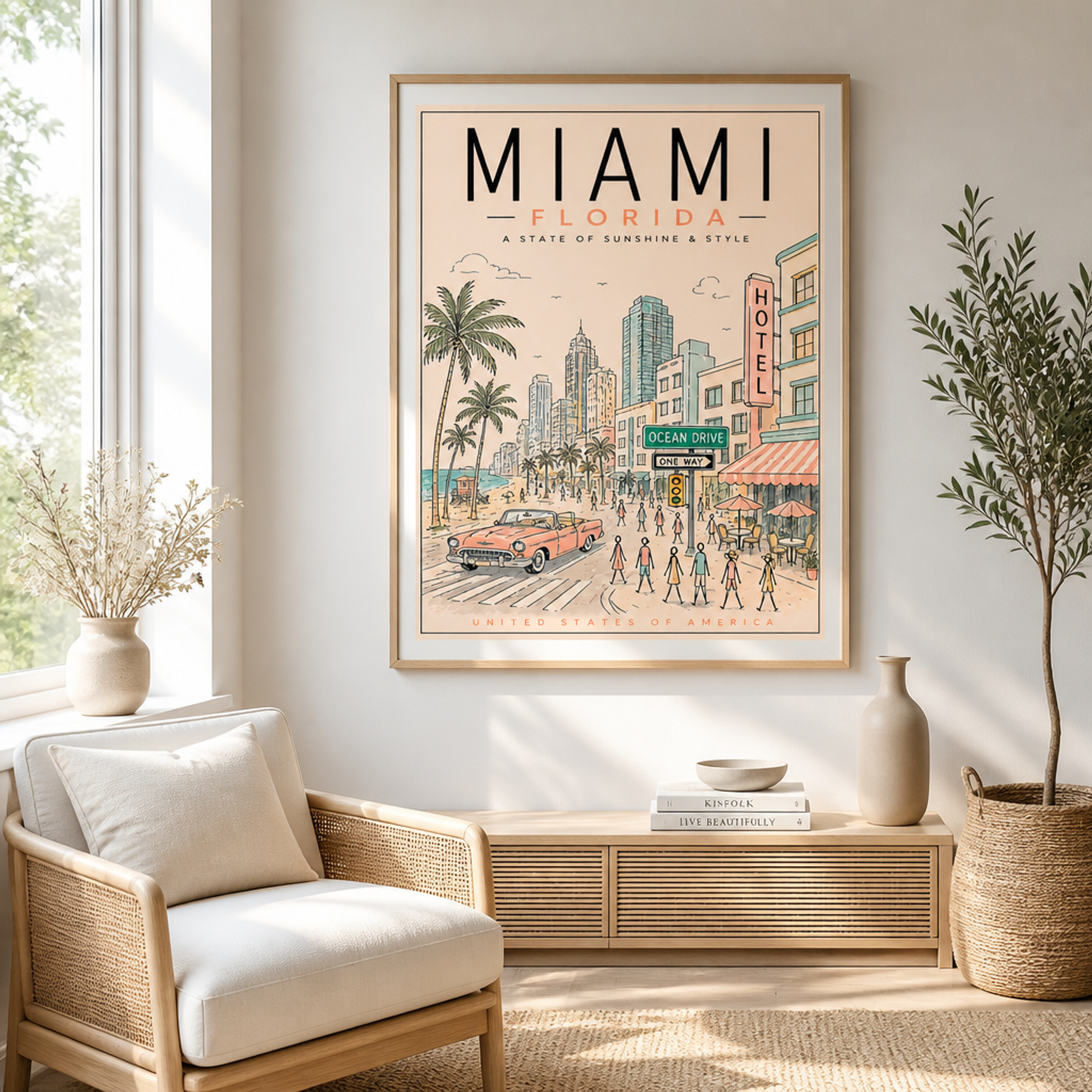
Generating the same poster across multiple frame and room combinations takes minutes, not a reshoot.
What to do if you actually sell framed prints
All of the above is written for the common case — a paper print that ships flat. If you genuinely sell a framed product (the frame is part of what the buyer pays for), the calculus flips: you want the framed mockup to be as accurate as possible to the real frame's colour, width, and material, since now it's a description of the product rather than a styling reference. In that case, treat the frame choice as a spec, not a mood — match it to what actually ships, and skip the "print only" disclaimer since it no longer applies.
Generate every frame style from one upload
Upload your poster once and try it framed and unframed, in 18 room styles, before you pick what goes in your listing.
Try free — no account needed →None, black, white & wood frames · 2000×2000 · 300 DPI
Frequently asked questions
Will Etsy penalise me for using a framed mockup on an unframed listing?
Not for the photo itself — mockups are standard practice across the marketplace. The risk is a listing that never clarifies the frame isn't included, which can lead to buyer complaints and, in repeated cases, action from Etsy on misleading listings. One unframed photo plus a line of text in the title or description resolves this.
Should my very first photo be framed or unframed?
Framed, in almost all cases. The first photo's job is to earn the click in search — a styled room shot does that far better than a flat print on white. Save the unframed "what you get" shot for a later position in the gallery, once you've already earned attention.
Do I need a different mockup for every frame colour I mention in the listing?
No — generate mockups in whichever single frame style best represents your art's mood, and keep your unframed "true product" photo neutral. You don't need to mock up every frame colour a buyer could theoretically choose unless you're actually selling frame-colour as a variant.
Can I generate both framed and unframed versions from the same upload?
Yes — PosterMock AI's frame selector includes a "None" option alongside black, white, and natural wood, so the same poster upload can produce your styled room shots and your flat, unframed reference photo in the same session.